If you are looking to bring your product idea to life with Canadian design and electronic contract manufacturing expertise, connect with us.
Where Innovation Meets Reality: Our CES 2026 Recap
Heading to CES 2026, we were both genuinely excited to experience the world’s largest technology show. For Michael Gavrilos, it was a first visit. For Nonthachai S., it was a return after nearly a decade away. Walking into the show together, it quickly became clear that this was going to be an eye-opening experience, offering a firsthand look at just how much the industry has evolved.
CES 2026 delivered a powerful message: the future is not approaching, it is already here, operating in real environments, at real scale, and with real impact.
From the moment we stepped onto the show floor, we were struck by the sheer breadth and density of innovation on display. It was nearly impossible to walk more than a few steps without encountering something that demanded closer inspection. The automotive, automation, and robotics halls in particular were alive with technologies that felt less like concepts and more like deployed solutions.
What stood out most was not just what companies were showing but how confidently they were showing it.
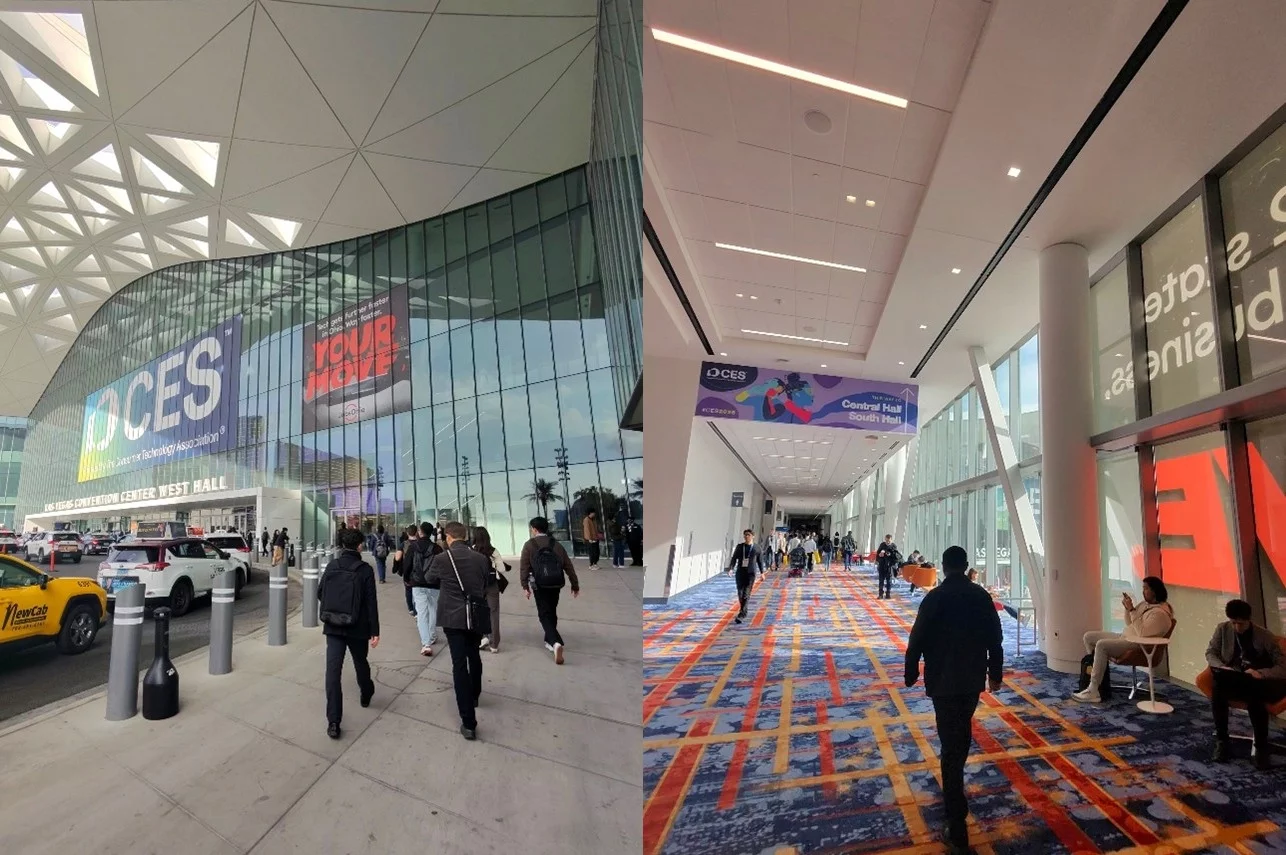
From Concepts to Reality: Technology Under Full Scrutiny
Across the show, live demonstrations were everywhere. These were not carefully controlled, behind-the-scenes previews; they were real-time systems operating in full view. That level of transparency speaks volumes about the maturity and reliability of the technologies on display.
Whether it was automation platforms, autonomous systems, or AI-driven products, the focus was clearly on real-world performance. The demos illustrated tangible benefits: streamlined workflows, improved efficiency, reduced waste, and faster paths from idea to implementation. This was not innovation for innovation’s sake, but was technology designed to deliver measurable value.
AI Is Everywhere
If there was one unifying theme at CES 2026, it was this: AI is no longer optional or experimental. It is expected.
The conversation has clearly shifted from “Does this product use AI?” to “How deeply is AI integrated?” Across every category, mobility, infrastructure, wearables, robotics, and automation, AI was the underlying engine driving perception, decision-making, personalization, and autonomy.
CES 2026 was not about isolated smart devices. It was about intelligent systems that are connected, adaptive, and increasingly autonomous.
Automotive: The Road to Full Autonomy
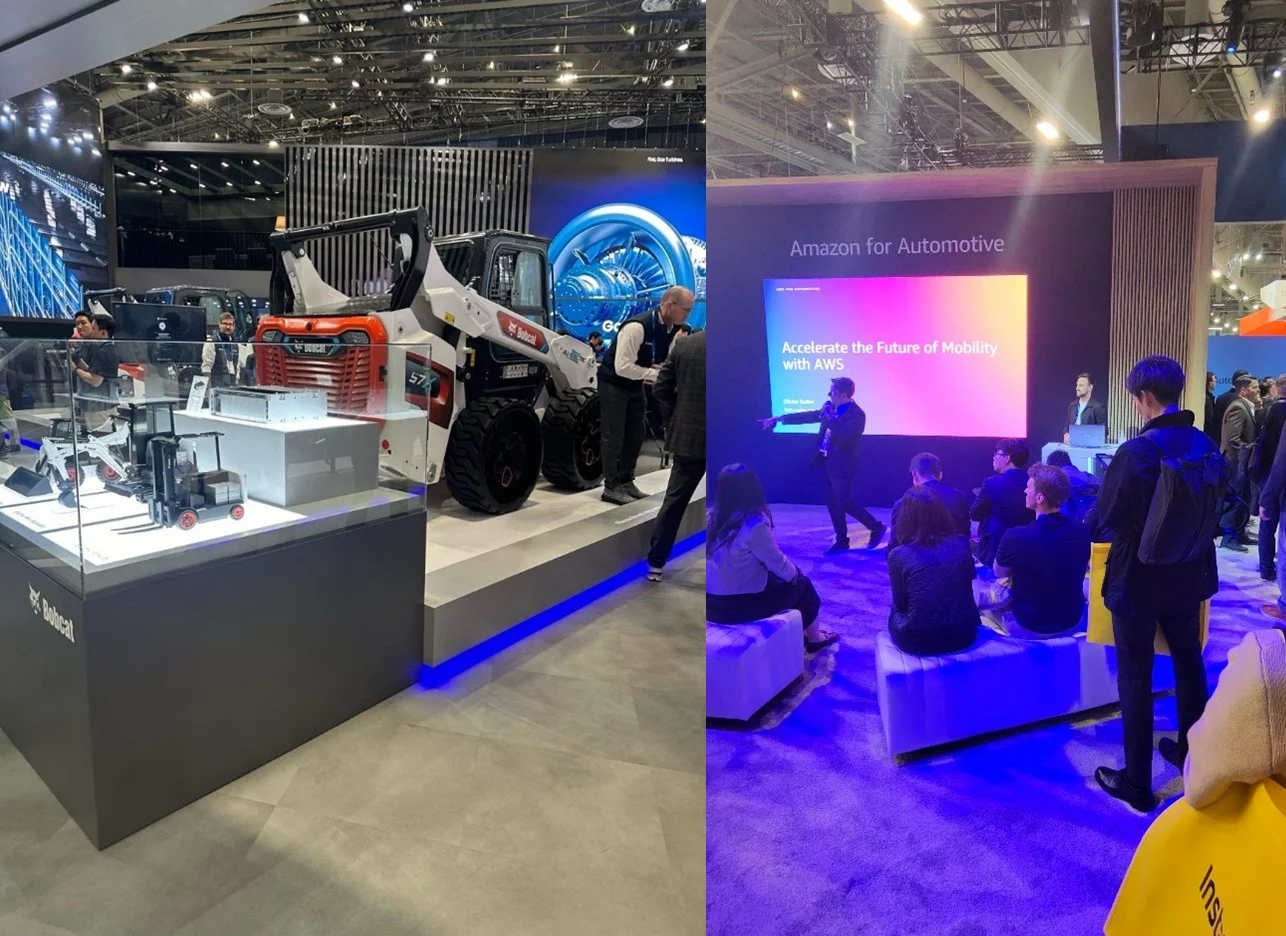
The automotive industry continues its clear march toward self-driving vehicles. This year’s focus was not just autonomy as a concept, but autonomy as a system, powered by advanced sensing and real-time intelligence.
During our time in Las Vegas, we saw autonomous vehicles operating on real streets, navigating traffic and responding to real-world conditions. This was not just a staged demo; it was a glimpse of self-driving technology actively at work in everyday urban environments.
Wearables: AI That Lives with You
Wearables took a major leap forward this year, becoming more context-aware, responsive, and personal, thanks to AI. One standout trend was real-time translation earphones, enabling seamless, natural conversations across languages.
But AI-powered wearables are not just for convenience, they are transforming healthcare. From smartwatches to specialized sensors, AI is now redefining diagnostics, enabling continuous monitoring, early detection, and personalized insights.
Another exciting development this year is the rise of AI-assisted exoskeletons. These wearable robotic systems enhance mobility, support rehabilitation, and assist workers in physically demanding tasks.
Wearables are no longer passive trackers; they are intelligent companions, bridging everyday life and proactive healthcare, all powered by AI.
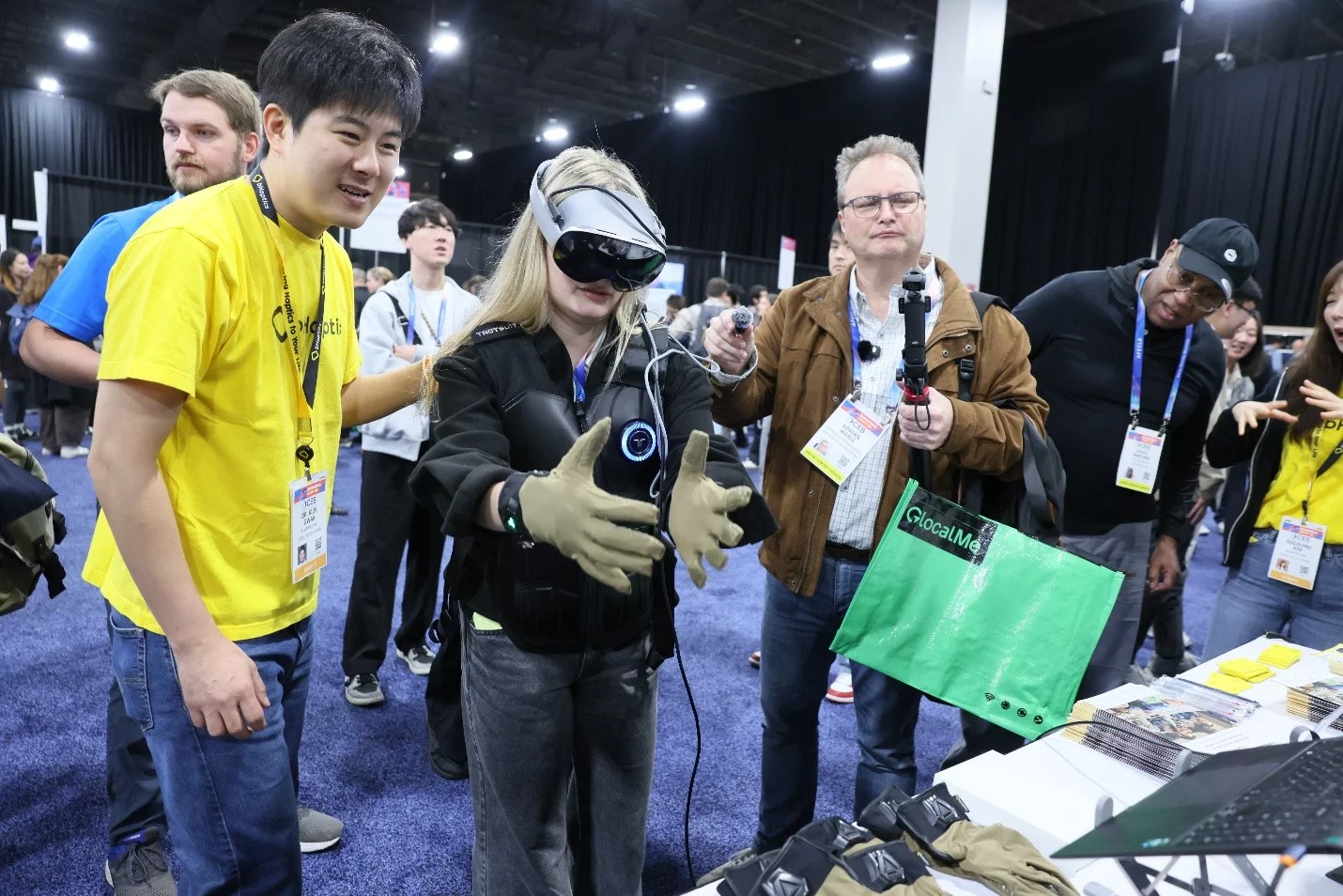
Image credit: Consumer Technology Association (CTA)®
Robots Everywhere, Especially Humanoids
Perhaps the most striking visual trend at CES 2026 was the presence of robots everywhere. Nearly every major tech company introduced or showcased its own robot, many of them humanoid.
Humanoid robots are no longer futuristic concepts hidden behind glass. They are becoming increasingly common and practical, designed to interact naturally with humans in workplaces, homes, and public spaces. What once felt like science fiction is now moving rapidly toward everyday reality. Some humanoids even demonstrated advanced physical skills, like boxing or playing ping-pong, highlighting how AI-driven motion control and real-time perception are enabling robots to perform complex, dynamic tasks.
Beyond humanoids, service robots also showed major leaps in real-world usability. One standout example was the stair-climbing vacuum robot, a long-standing challenge in home robotics. By combining advanced perception, AI decision-making, and improved mechanical design, these robots can now navigate stairs and multi-level spaces, bringing true hands-free automation closer to reality.
Together, these developments signal a shift from novelty to usefulness. Robots at CES 2026 were not just impressive to watch, they were clearly designed to live and work alongside us. What once felt like science fiction is rapidly becoming everyday technology.
Infrastructure: Powering the AI Era
Behind every AI-driven experience is a massive, often invisible backbone. CES 2026 highlighted the growing importance of infrastructure designed specifically to support AI servers, from high-performance data centers to edge computing and energy-efficient architectures.
During the show, we spoke with one data center infrastructure management company focused on AI workloads, and their message was clear: power is now the biggest constraint, and the biggest design driver. They noted that next-generation AI data centers are increasingly being planned and built next to power plants to maximize efficiency, reduce transmission loss, and ensure the massive, consistent energy supply that AI training and inference demand.
At the same time, this direction is a bit unsettling. The scale of energy required raises important questions about sustainability and environmental impact. As AI continues to expand at this pace, it is worth imagining what this means for our planet and whether innovation can move just as quickly toward cleaner energy and more responsible infrastructure.
As AI workloads scale rapidly, the industry is rethinking not just servers and cooling, but where and how data centers are built. Infrastructure is no longer just support; it is a strategic foundation for the AI era.
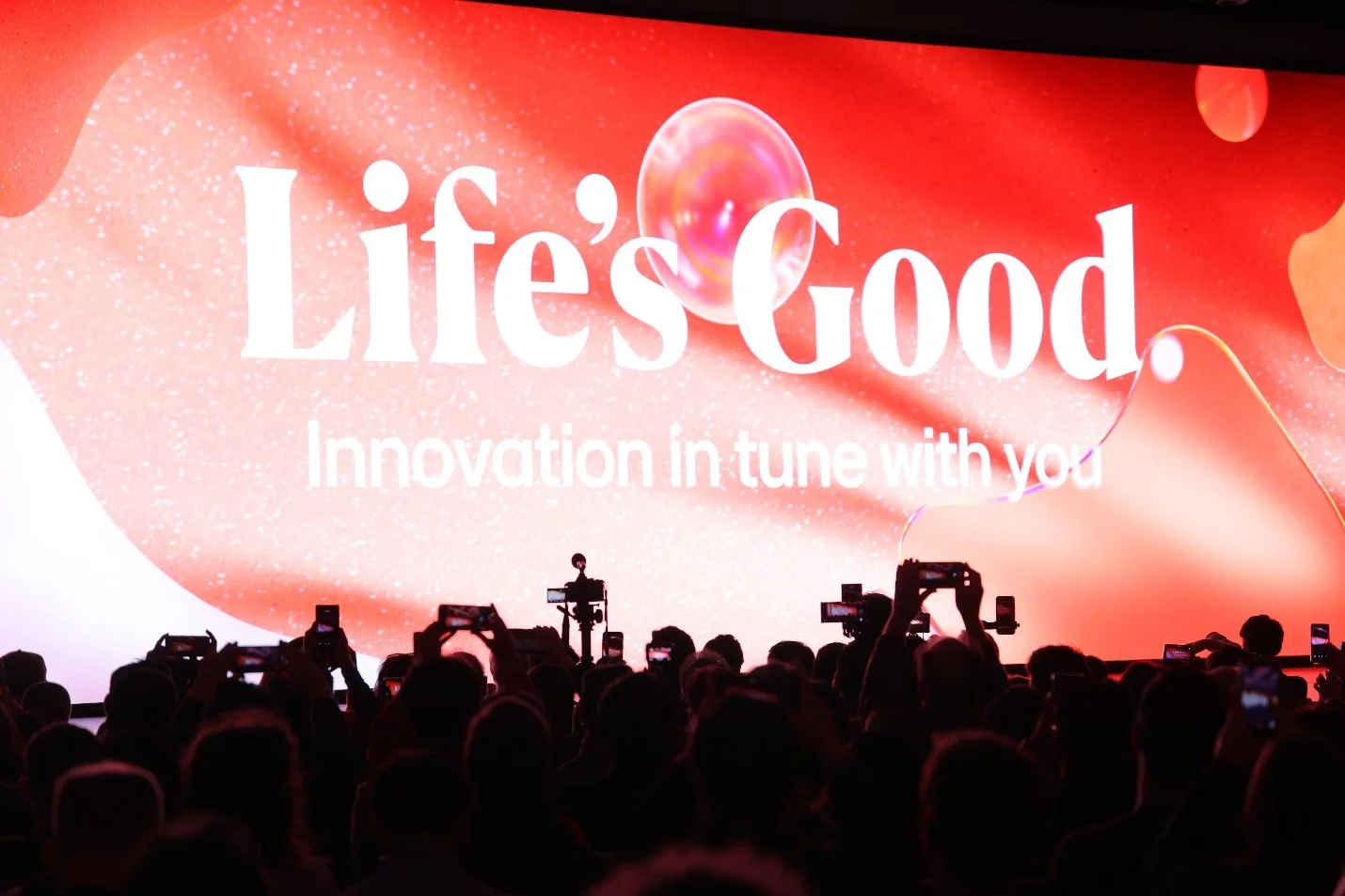
Image credit: Consumer Technology Association (CTA)®
The People Behind the Technology
Beyond the technology itself, one of the most rewarding aspects of CES 2026 was the people. We had the opportunity to meet knowledgeable, approachable professionals from across the global tech ecosystem. The conversations were thoughtful, candid, and forward-looking and we made several strong connections that we look forward to building on.
Our only regret, aside from sore feet, was not having more time to see it all.
The Big Picture
CES 2026 reinforced what we see every day at NeuronicWorks: great products succeed not because of bold ideas alone, but because of disciplined execution. Behind every AI-powered device, autonomous system, or intelligent robot is a complex foundation of hardware design, embedded firmware, manufacturability, and reliability. As a product development and electronic contract manufacturing partner, our role is to bridge the gap between innovation and reality, helping companies take advanced technologies from concept to scalable, production-ready products.
The future is not just a collection of smart devices; it is a smart world. And after CES 2026, one thing is certain: AI is not coming. It is already here.
All Blogs