Are you interested in collaborating with us for our next event and work towards strengthening the tech ecosystem in Toronto? Let’s talk.
From Concept to Manufacturing: Highlights from Our Toronto Tech Week Workshop
We had the pleasure of hosting the “From Concept to Manufacturing: Building Real Hardware in Canada,” workshop at NeuronicWorks in Toronto as part of Toronto Tech Week on May 28, 2026.
The event brought together founders, engineers, innovators, startups, students, and ecosystem partners for a full day of conversations focused on the realities of developing and manufacturing hardware products in Canada. From the moment attendees began arriving in the morning, there was a strong sense of energy, curiosity, and collaboration throughout the facility.
We were especially encouraged by the overwhelming response to the workshop, with registrations reaching capacity and a growing waitlist leading to the event. It was inspiring to see so much interest from the community in strengthening Canada’s hardware and advanced manufacturing ecosystem.
A Day Focused on Real-World Hardware Innovation
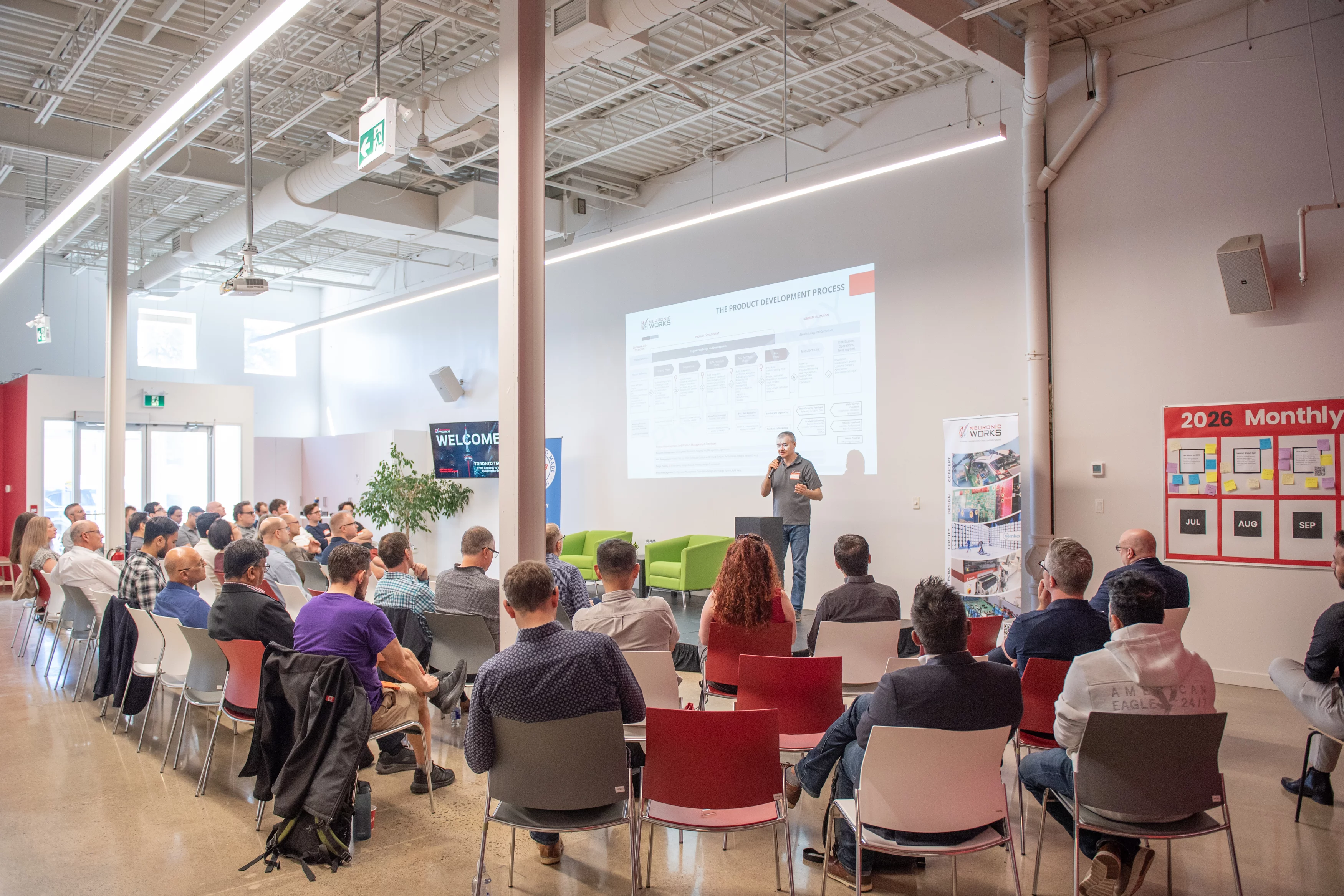
The workshop opened with introductory remarks by Titu Botos, CEO and Founder, NeuronicWorks Inc., about the importance of collaboration, learning, and community building within the Canadian technology sector, followed by a session exploring what it truly means to move from concept to manufacturing as a product innovator.
The discussions throughout the day focused not only on technical product development, but also on the business, operational, funding, and intellectual property considerations that companies must navigate as they scale.
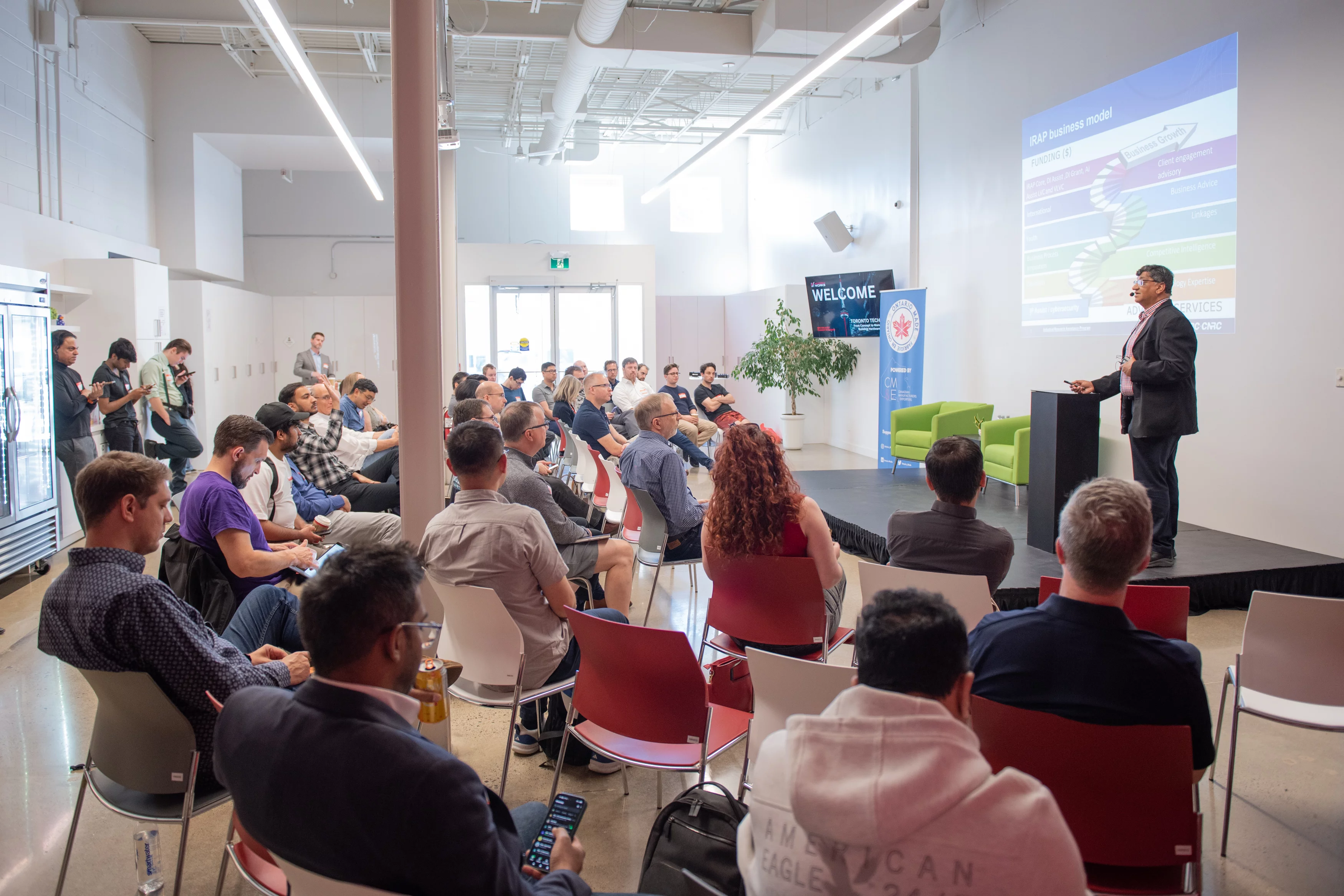
One of the key sessions of the day was the presentation on funding pathways for hardware startups and government support programs presented by Mustafa Jaffer, Industrial Technology Advisor at NRC IRAP. Attendees gained valuable insight into how Canadian SMEs can access advisory support, commercialization guidance, and innovation funding through programs such as NRC IRAP. The session highlighted the importance of helping companies validate ideas, develop innovative technologies, build global competitiveness, and accelerate commercialization through strategic support and collaboration.
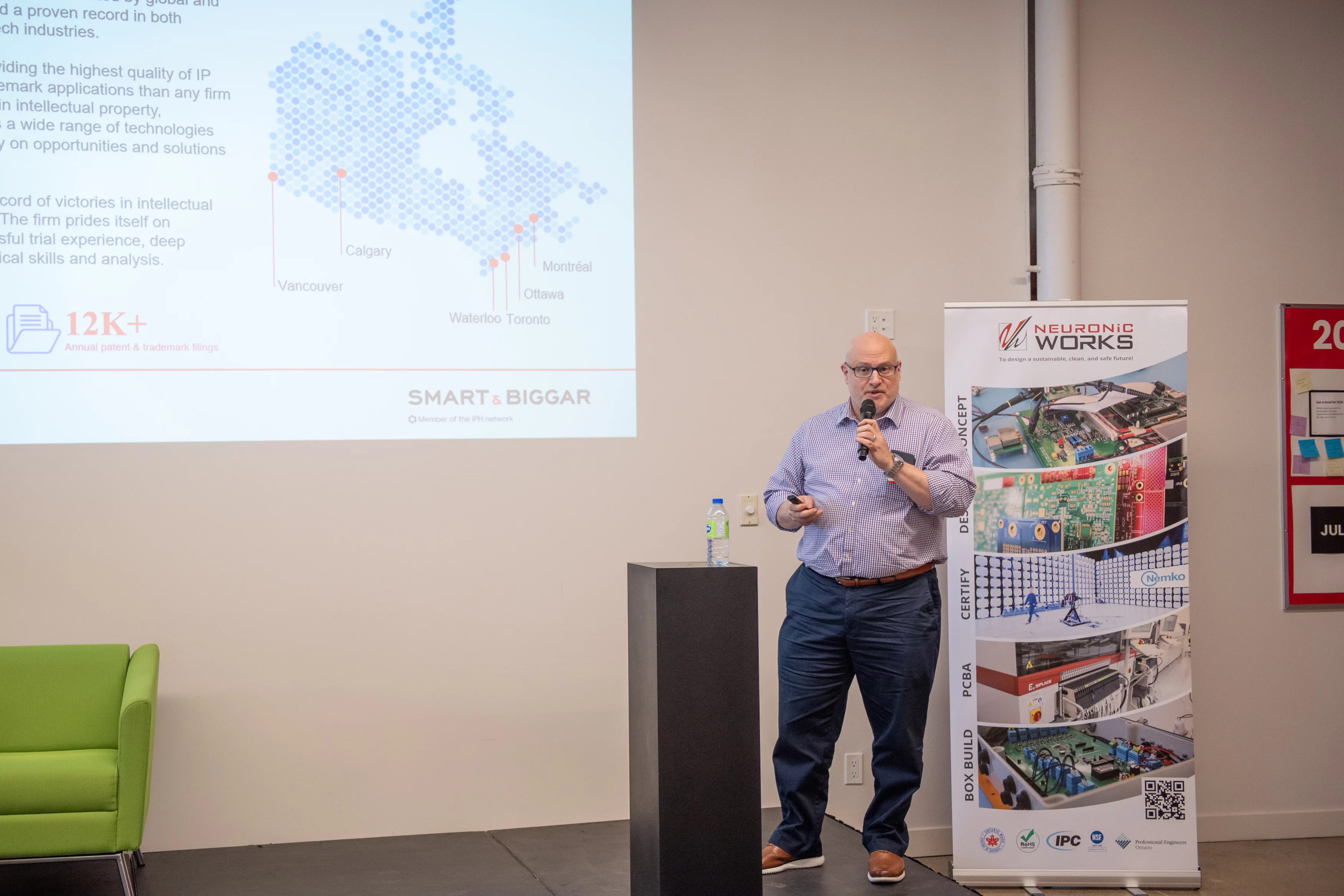
The intellectual property session, presented by Tony Orsi, Principal at Smart & Biggar, also generated significant engagement and discussion among attendees. The presentation emphasized that IP is not simply a legal exercise, but a strategic business asset that can help startups differentiate themselves, attract investment, increase company valuation, and protect innovation over the long term. The session explored practical considerations for hardware companies, including patents, trademarks, copyrights, industrial designs, trade secrets, open-source software considerations, confidentiality, and ownership agreements. It also highlighted common IP pitfalls faced by startups, such as delaying IP planning, disclosing inventions too early, or not having appropriate agreements in place with contractors and third parties.
A particularly valuable takeaway for many attendees was the importance of building layered IP plans that evolve alongside business growth and product commercialization, rather than treating IP as an afterthought.
Meaningful Discussions and Community Engagement
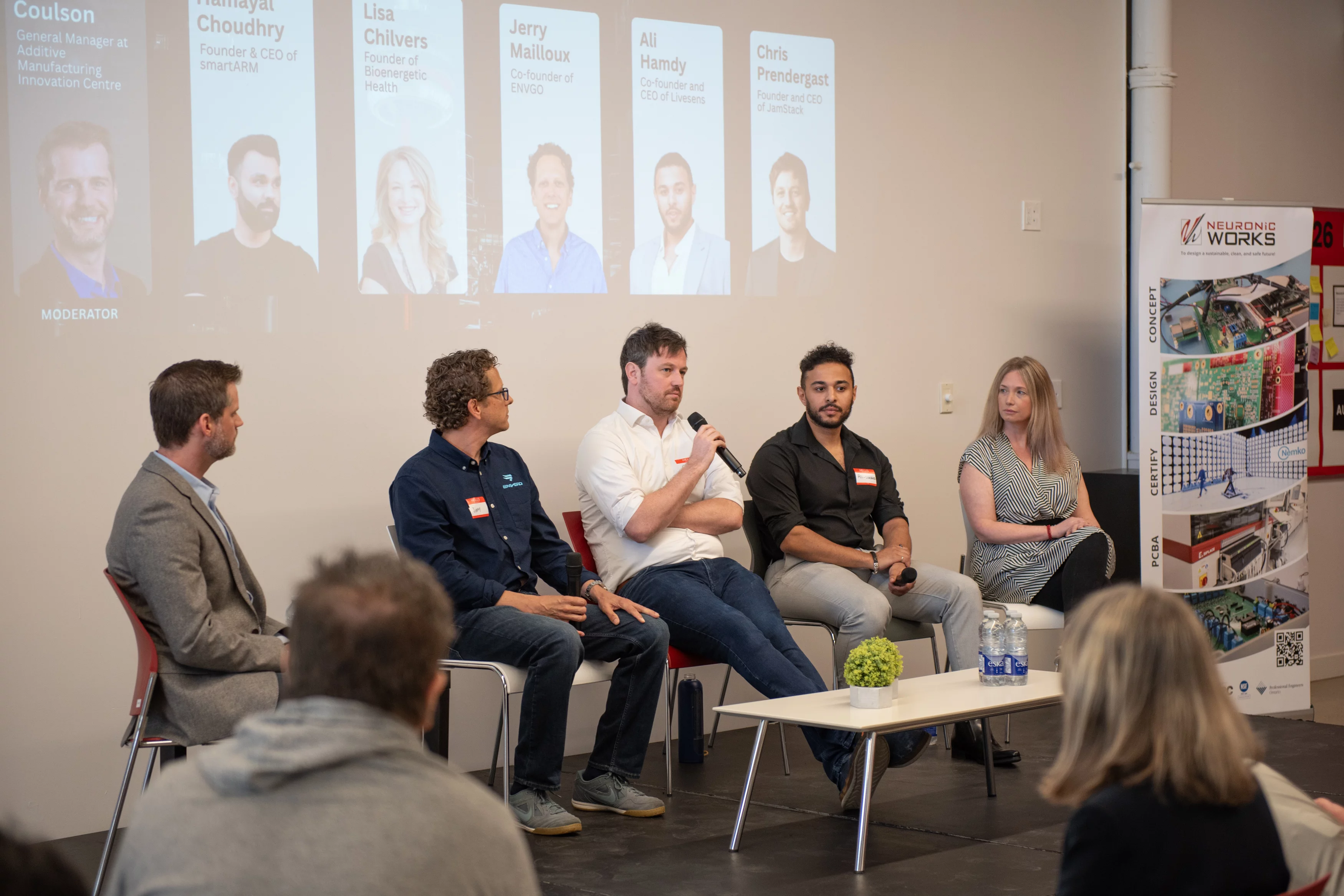
Another engaging part of the workshop was the panel discussion on the realities of building a technical product startup. The conversation brought together founders and industry leaders who shared candid insights from their own journeys of developing, funding, and commercializing technology products.
The panelists were Jerry Mailloux, Co-founder at ENVGO, Chris Prendergast, Founder & CEO at Jamstack, Ali Hosny Hamdy, Co-founder & CEO at LIVESENS, Lisa Chilvers, CEO and Founder at BioEnergetic Health, and was facilitated by Simon Coulson, MASc, PEng, General Manager at Additive Manufacturing Innovation Centre, Mohawk College.
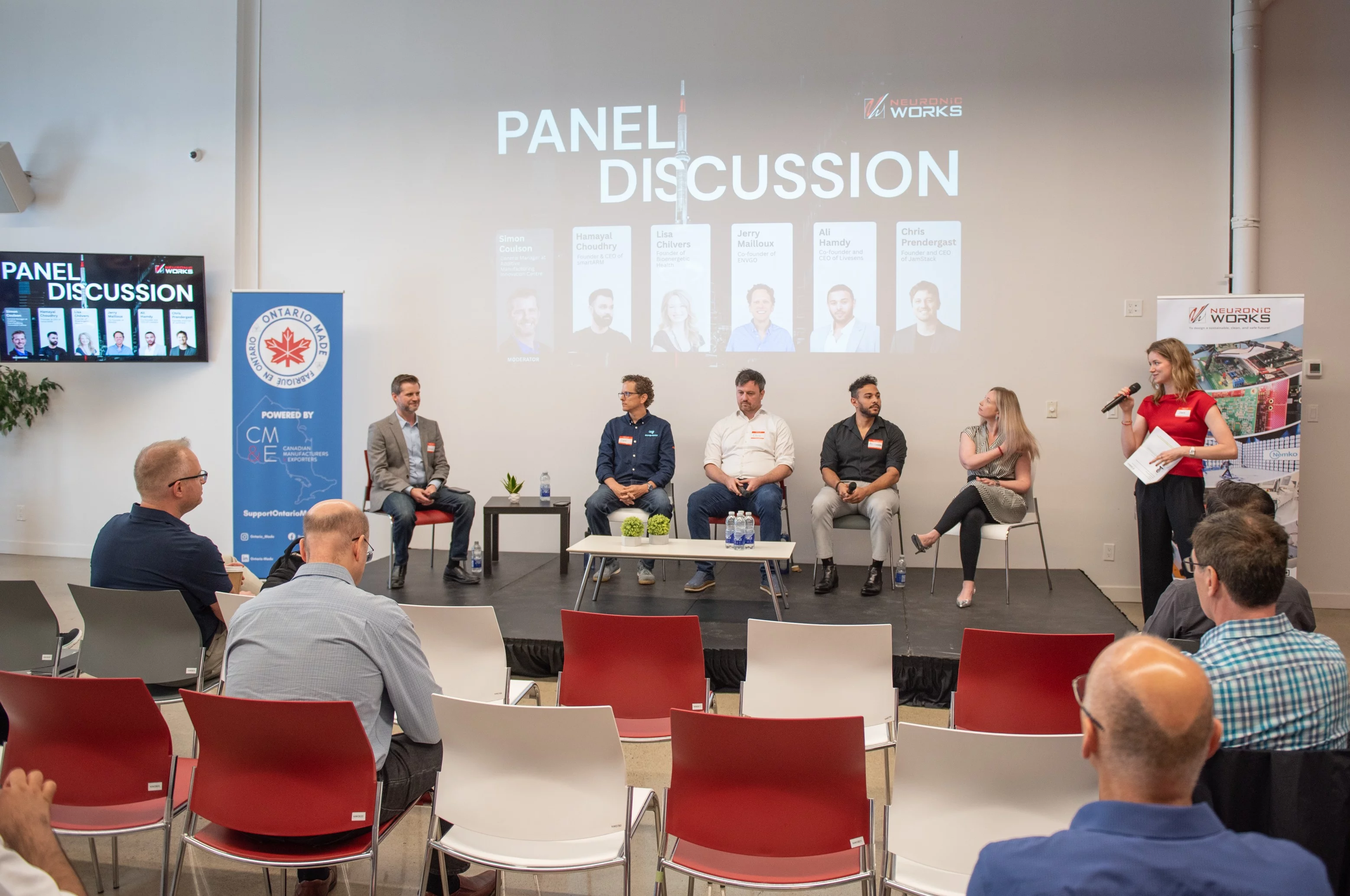
A recurring theme throughout the discussion was that hardware development is rarely a straight line. Panelists spoke openly about the iterative nature of product development, where teams often find themselves building, testing, failing, refining, and repeating the process multiple times before arriving at a viable product. While this can sometimes feel frustrating, attendees were reminded that iteration is a normal and necessary part of innovation.
The discussion also highlighted why many believe this is an excellent time to build hardware companies in Canada. As global supply chains continue to evolve and governments place greater emphasis on domestic innovation and manufacturing capabilities, there is increasing interest in companies that can address both the hardware and software aspects of a product. Panelists noted that local manufacturing partnerships can provide significant advantages, including easier collaboration, faster problem-solving, and direct access to production facilities for quality control and continuous improvement.
Funding was another major topic of discussion. The panelists emphasized the importance of planning for a sufficient cash runway and understanding that the journey from prototype to commercialization often takes longer than expected. While angel investment can provide meaningful early-stage support, progressing to venture capital funding typically requires strong traction, revenue growth, and measurable business results. Government support programs such as NRC IRAP and SR&ED were highlighted as valuable resources that can help companies advance development efforts and extend their runway. Attendees were encouraged to begin documenting their technical work and development activities early, making it easier to take advantage of programs such as SR&ED when the time comes.
Another interesting perspective shared was the importance of balancing intellectual property protection with market engagement. While protecting innovations is important, several panelists noted that early-stage companies can sometimes become so focused on secrecy that they delay customer validation and market feedback. The consensus was that entrepreneurs should focus on building, testing, learning, and refining their solutions while developing an IP strategy that supports those efforts.
The panel also explored practical approaches to reducing development risk and cost. Founders discussed the value of simulations, mock-ups, prototypes, and early validation activities that can help teams learn quickly and make informed decisions before investing heavily in tooling, manufacturing, or commercialization.
The discussion generated so much interest from attendees that it continued beyond the scheduled time, reflecting both the quality of the conversation and the appetite within the community for open discussions about the realities of building hardware businesses in Canada.
Thank You
We would like to sincerely thank all of our speakers, panelists, moderator, attendees, and community partners for contributing their time, expertise, and energy to the workshop.
Special thanks to Toronto Tech Week, for organizing an incredible week dedicated to technology, innovation, entrepreneurship, and community building across the city. Also, very grateful for the support of our ecosystem partners who helped promote the event, including Innovation Factory, CITM, Wurth and Spark Centre.
At NeuronicWorks, we remain committed to supporting innovation, advanced manufacturing, learning, and collaboration within Canada’s technology ecosystem. Events like this reinforce the importance of bringing together innovators, builders, and industry experts to share knowledge and strengthen the path from idea to commercialization.
Thank you again to everyone who joined us and helped make the workshop such a success. We look forward to Toronto Tech Week 2027!
All Blogs